
Character Consistency in AI Art: The Biggest Problem (Solved)
AI image tools generate beautiful art — but every character looks different each time. Here's why consistency is so hard, and how PulseBook solves it.
The consistency crisis in AI art
AI image generation has made stunning progress in the last two years. You can now generate a beautiful illustration in seconds — something that would have taken a human artist days. But there's a catch that every author discovers the hard way: generate the same character twice, and you get two different people.
This isn't a minor inconvenience. It's a showstopper for book illustration. A children's book where the protagonist has blonde hair on page 3 and brown hair on page 7 breaks the reader's immersion instantly. A graphic novel where the hero's costume changes color between panels is unusable. Character consistency isn't a nice-to-have — it's the minimum bar for illustrated storytelling.
Why generic AI tools fail at consistency
Most AI image generators — Midjourney, DALL-E, Stable Diffusion — are designed to create one beautiful image at a time. Each generation is independent. The AI has no memory of what it created before.
You can try to enforce consistency through prompts: "same character, red hair, green eyes, denim overalls, round glasses." But these are suggestions, not constraints. The AI interprets them differently each time. Hair might be a slightly different shade. The glasses might change shape. The face structure shifts.
This is fundamentally a design limitation, not a quality issue. These tools were built for single-image generation. They were never architected for the multi-image consistency that book illustration demands.
How PulseBook's character DNA works
PulseBook takes a fundamentally different approach. Instead of describing your character in a prompt every time, you build a character once. The system stores what we call "character DNA" — a structured profile that includes:
- Physical appearance (hair, eyes, build, skin tone, distinguishing features) - Clothing and accessories (outfit details, colors, signature items) - Personality traits that influence pose and expression - Reference images that define the visual identity
When you generate an illustration, the character DNA is injected into the generation pipeline as a set of hard constraints, not loose suggestions. The AI knows exactly what Luna looks like — not just "red hair and overalls," but the specific shade, the way her hair curls, the freckle pattern on her cheeks, the worn patch on her left overall strap.
This isn't prompt engineering. It's a different architecture — one built for narrative illustration from the ground up.
The @mention system: characters as first-class citizens
The most visible expression of this philosophy is the @mention system in the scene editor. When you write a scene description, you don't re-describe your characters. You type @ and pick their name:
"@Luna discovers a glowing crystal in the forest while @Bramble examines an old map and @Captain_Splash peers through his spyglass."
Each @mention pulls in the full character DNA. You can reference multiple characters in the same scene. You can change which characters appear, add new ones, or remove them — without rewriting anything. The system handles composition, character placement, and interaction automatically.
This transforms the authoring experience from "prompt engineering" to "directing a scene." You think about what happens, not how to describe what your characters look like for the hundredth time.
Character replacement: prove it to yourself
The acid test for any consistency system is character replacement. Can you swap one character for another and regenerate the same scene composition?
In PulseBook, you can. Replace Luna with a different character — a boy in a red hoodie, a grandmother with silver hair, a cat detective — and regenerate. The scene composition holds. The other characters stay the same. The location remains. Only the replaced character changes, and they're rendered consistently with their own DNA.
This is something no generic AI tool can do. It requires the system to understand that a character is a discrete, persistent entity — not just a text description that gets reinterpreted on every generation.
What this means for your book
Character consistency changes the economics of AI book illustration:
- You create characters once, not per-page. Each character is a reusable asset. - You can experiment freely. Try Luna in different styles, different scenes, different moods — she stays Luna. - You can scale. A 32-page book with 3 characters is as easy to manage as a 5-page test. - You own the characters. Export them, use them in sequels, build a series around them.
For self-publishing authors, this is the difference between "AI is interesting but not ready" and "I can publish this book." Consistency is what makes AI illustration a production tool rather than a toy.
Frequently Asked Questions
How many characters can I have per book?▾
Does character consistency work across different illustration styles?▾
What if I want a character to change (new outfit, different age)?▾
How is this different from Midjourney's --cref parameter?▾
Explore These Styles
See these illustration styles in action — each with sample images and full details.
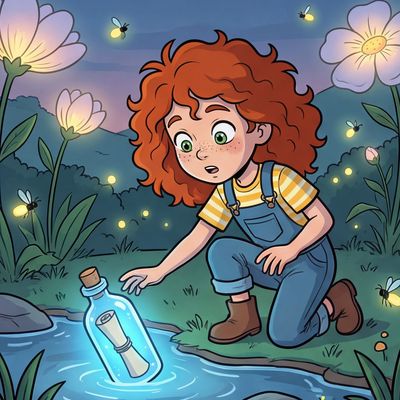
Ligne Claire
Clean uniform outlines with flat vivid colors, inspired by Hergé and European comics.
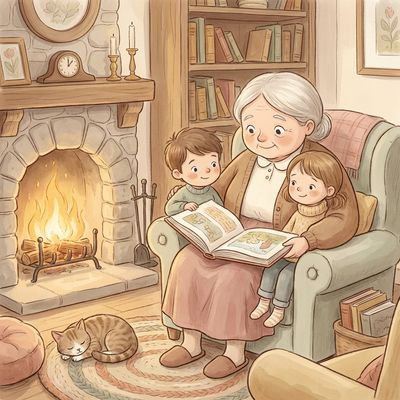
Cozy Storybook
Warm, inviting style inspired by classic picture books with soft, rounded shapes.
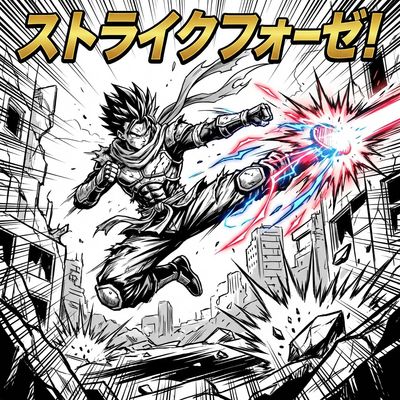
Manga Action
Dynamic manga-style with bold linework and high-energy compositions.

Soft Digital Painting
Contemporary digital painting with smooth gradients and soft lighting.
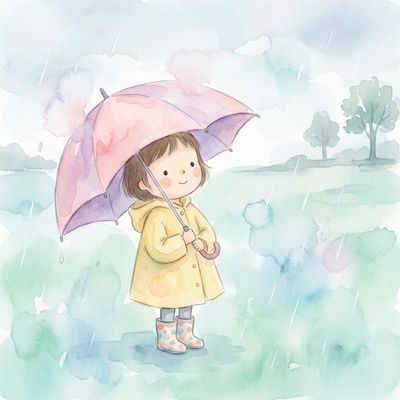
Whimsical Watercolor
Delicate watercolor style with soft edges and translucent color layers.
Try These Styles Yourself
Create characters, pick a style, and generate consistent illustrations for your book.
Start Free